Sunday, May 4, 2014

The Bog Turtle


"The Bog Turtle was federally listed as a threatened species in 1997."

        Around 4 inches long, the Bog Turtle is one of North America’s tiniest Turtles. It's colors include bright yellow, orange and red blotches on the sides of their heads. They live partly in the water and eat insects, seeds and snails. Bog Turtles live in desolate wetlands such as swamps and marshy pastures. These turtles enjoy the soft mud at the bottom of the water with aquatic inlets that allow them to swim, but enjoy the land close by. Bog Turtles hibernate from September to April.

Where are they?
Bog Turtles reside in New York and Massachusetts and all the way down to Maryland. Small numbers of Bog Turtles have been reported in Pennsylvania and the Lake George and Finger Lakes regions of New York. 

http://www.fws.gov/northeast/nyfo/es/bogturtle.htm


The reasons for the threat to the species are are the elimination, breakdown, and alterations of their habitats from wetland adaptation, people building and developing the land, pollution and invasive species. Unfortunately, the Bog Turtle is threatened by illegal wildlife trade.


U.S. Fish and Wildlife Service - Hadley, Massachusetts, have come up with a recovery plan for the species of turtles:

"The overall objective of the bog turtle recovery program is to protect and maintain the northern population of this species and its habitat, enabling the eventual removal of the species from the Federal List of Endangered and Threatened Wildlife and Plants."

"Habitat Requirements and Limiting Factors : Bog turtles usually occur in small, discrete populations, generally occupying open-canopy, herbaceous sedge meadows and fens bordered by wooded areas. These wetlands are a mosaic of micro-habitats that include dry pockets, saturated areas, and areas that are periodically flooded. Bog turtles depend upon this diversity of micro-habitats for foraging, nesting, basking, hibernation and shelter. Unfragmented riparian systems that are sufficiently dynamic to allow the natural creation of open habitat are needed to compensate for ecological succession. Beaver, deer, and cattle may be instrumental in maintaining the open-canopy wetlands essential for this species’ survival. 
Recovery Objective: The overall objective of the bog turtle recovery program is to protect and maintain the northern population of this species and its habitat, enabling the eventual removal of the species from the Federal List of Endangered and Threatened Wildlife and Plants"

http://www.fws.gov/northeast/nyfo/es/bogturtle.pdf

The Recovery Plan is an intensive 80 page document that covers all of the specific areas that need to be changed. Including saving the turtles environments and protecting them from illegal wildlife trading.

Saturday, May 3, 2014

Sentient Creatures


Ms. Chitra Besbroda founded Sentient Creatures, Inc. In 1994. Sentient Creatures is a non-profit animal rescue institution that concentrates on rescuing Harlems “junkyard dogs.” Chitra has rescued over 3,500 abused and neglected dogs and placed them into new loving homes. After much effort to try and contact Chitra, I was unable to schedule an interview with her. Luckily, the website has an entire page explaining how she began her journey to save these animals, and what the experience has been like. 


1.) What made Chitra want to dedicate her life to rescuing animals?
Growing up, Chitra’s parents placed a huge importance on pets and the treatment of animals in their household. About 20 years ago she saved her first dog, Teddy. Teddy was a German Shepard who was trapped behind closed doors with no food or care. Chitra was able to feed him through the keyhole of the door and eventually rescued him. After that she dedicated her life to saving needy animals in Harlem. 

2.) What has been the biggest struggle?
The original shelter was taken from the organization in 2000. After buying a building in 1997, there was many noise complaints and the residents around the building tried to get the shelter evicted. After winning the law suit, the shelter was still evicted once their lease had ended in 2000. In addition, Chitra explains the many hostile environments she has experienced while saving animals. Chitra has been reported for trespassing and for theft while trying to save animals. On the website Chitra explains that she has had to worry about her own safety while rescuing animals.

She's been seriously attacked on three different occasions and verbally abused countless times by the owners. "It's always there," says Besbroda. "There's always a threat and the possibility that I'll not return after going into Harlem to rescue the dogs or feed them."

3.) What do you do to ensure the animals you have rescued go to a good home?
Placing an animal can take months. After receiving medical care upon arrival, the animal will stay at the shelter to assure they recover successfully. For adoption, the shelter requires 4 references, a criminal screening and a home visit. 

"Among all the struggle, Besbroda maintains her vision to one day have her own shelter where she can house "her" animals temporarily until new homes can be found. "I am dreaming of how they will have the play area, what they will eat, what music they will listen to, how I'll get services from dog trainers to train the ones who are biters."


Her awards include:
"Heart of Gold" award - Animal Medical Center 
"Unsung Hero" award -  Veterinary Medical Association. 
 Roger Caras, former president of the ASPCA,  named Chitra "Mother Teresa for Animals".

The Sentient Creatures website seems to not have been updated in the past 5 years - and in addition to not being able to contact Chitra, It is worrisome to think that the shelter never made a recovery after being evicted in 2000. No matter what, Chitra is still living in New York and undoubtably still saving animals. The website is:

http://www.sentientcreatures.org/front.html


Friday, May 2, 2014

Diane Rehm Show - Fight for Legal Rights For Animals


         Although the US has many laws that protect animals from abuse, many animals are still suffering. Steven Wise is an animal activist and lawyer. Wise is the head of a group of lawyers that fight against the abuse of animals.The group filed a lawsuit in support of a chimpanzee named Tommy. The group of lawyers use evidence that shows Chimpanzees intelligence is similar to humans, and should be treated equally. Wise was able to gain the support of leading primatologists.
Guests on the Diane Rehm Show to discuss the lawsuit are as follows:
Steven Wise - lawyer and president of the Nonhuman Rights Project; author of "Rattling the Cage: Toward Legal Rights for Animals."
Charles Siebert - poet, journalist, essayist and contributing writer for The New York Times magazine.
Robert Destro - professor of law and director of the Interdisciplinary Program in Law & Religion, Columbus School of Law, at The Catholic University of America.
Alan Dittrich - president of the Massachusetts Society for Medical Research.


“Well, it's been now 34 years. I read Peter Singer's book in 1980 and I was a much younger practicing lawyer and I had gone into law because I was interested in social justice issues. And Peter Singer's book opened my eyes to the fact that nonhuman animals were terribly suffering and were being abused and exploited and I thought there was nothing better I could do than to spend my legal career trying to help them.”
(Peter Singer's book, "Animal Liberation," 1975.)

         The first three lawsuits were in support of four chimpanzees in New York. Tommy resided in Gloversville, NY... And was found alone in a small cage. The law that they formed the lawsuit around was called habeas corpus. The other chimpanzees were also in desperate need of help. Kiko who lived in Niagara Falls and two youngsters who lived at Stonybrook University and were the objects of biomedical research.

A caller from St. Louis, Joanne stated the ethical problems with including animals in medical research. -
“I'm disturbed by the medical research personnel who has indicated that research would be devastating -- or devastated if we were not to use animals in research. I guess my feeling is, once again, humans are reducing animals to things and property and using them as means to our ends -- noble ends, for sure, but means to our ends. And that does violence to our own souls. That's very disturbing to me. And the second point I want to make is to continue to regard animals as mere things is to -- it lets us off the hook.”

        Joanne supports the lawsuit that the lawyers are presenting by explaining that the only reason humans can treat these chimpanzees the way they do in research is because we have labeled them as “property”. The entire lawsuit is proving that they are more than property, that they are legal persons.

          Dittrich then responded to the allegations of abuse in medical research by saying:
"As he knows, the world of research has changed in the 30 or 40 years that he's been involved in this project. And even the great Jane Goodall says this, as long as chimpanzees are used in medical research, it's our responsibility to treat them as humanely as possible. And I think that that is really the goal of the researchers right now -- humane treatment."

         After loosing in the lower courts, Wise explains that the plan is to win in the higher courts in New York. The goal is to make the courts realize that they are “legal persons” - which means their safety and liberty is protected by United States law. If they win the animals will be sent to sanctuaries, where they already have reserved spots. The sanctuaries will provide them with a safe and happy life with dozens of other chimpanzees. 


“Well, the problem is is that while there are animal welfare laws, animal welfare statutes, they really don't do a very good job in protecting nonhuman animals. Sometimes I speak to my students and I say, imagine that all of the laws that protect you in every way were repealed. And the only law that existed was one that said, you can't be treated cruelly. And if you are you have to go to the D.A. to bring a criminal action against the person you think treated you cruelly. Would you think that you were being adequately protected? And the answer that everyone gives is, no.”

         The ultimate goal is to challenge the courts on their moral code - and to hope they will do the right thing. After everything research has taught us about the intelligence of animals, it is unjust to treat them the way we have been doing. The are entitled to legal rights to their bodies and lives and deserve to live among their fellow species.

When asked if their case would go to the Supreme Courts - Wise stated:
“Well, it'll go as high as the supreme courts of the various states. The common law is not something that the Supreme Court of the United States deals with. It deals with federal statutes, the federal Constitution...”


http://thedianerehmshow.org/shows/2014-04-28/fight-legal-rights-animals/transcript


Saturday, April 12, 2014

Hunting Competitions

"In contest kills, slaughtering animals is a game. Participants try to kill the largest, smallest or most animals for cash or other prizes. Contest kills most often target prairie dogs, coyotes and pigeons, and treat these living animals as disposable game pieces." Humane Society

    In many of these contests, animals are brought to the finish line to be counted and weighed to to determine the winner. Especially with larger animals such as coyotes and wolves - the weight of the animal is a substantial part of the contest. As for pigeon shoots, the birds are released from a large box and the aim is to shoot as many as possible in an allotted time. 

     Friends of Animals is an organization that works to protect animals and protest their rights. The program has been battling animal killing contests in New York, and a recent article from February describes the protest experience from the annual "Squirrel Slam" in Holley NY. The contest was named a "fundraiser" which rewarded children and adults for killing squirrels (award depended on the amount of animals and weight and size). The biggest problem with this competition explains Friends with Animals is that children are participating. The larger the number of squirrels they kill, the more familiar they will be with killing.. and soon enough they will move on to larger animals and hunt on a regular basis. The website stated that over 2,400 squirrels were killed by the 400 participants. 


"But Friends of Animals had a message of its own, one that extends far beyond Holley. It isn’t just trying to change the minds of participants in the gruesome event or members of the Holley, N.Y. Fire Department—FoA won’t be satisfied until legislation is passed that makes all animal killing contests banned throughout New York State so that no animals have to die needlessly." Friends of Animals


The following bills are promoting the protection of wildlife and the ban of wildlife competitions:

In New York Senate Bill # 4074 
TITLE OF BILL: "An act to amend the environmental conservation law, in relation to making contests and competitions to take wildlife unlawful" NYgov

 Assembly Bill # 03661
"Provides that it shall be unlawful for any person to organize, conduct, promote or participate in any contest or competition where the objective of such contest or competition is to take the greatest number of wildlife." NYstate

Friday, April 11, 2014

Devocalization of Animals


          The devocalization of animals has become a hot topic concerning the rights of animals. Many pet-owners and animal testing labs have animals undergo the surgery for their own benefit, but do not realize the suffering that comes along with the surgery. Each state differs with the loopoles of the law. There is a current petition to try and make the surgery illegal in New York. :

“Sometimes dogs and cats must undergo vocal cord surgery 

to treat disease, like cancer, or to correct a birth defect. 

But when performed for the sole purpose of suppressing 

the animal’s voice, it is widely considered an act of cruelty.”


            The hope in New York is to pass the law that prohibits the surgery that removes animals vocal cords, unless it is for medical reasons. The dates that concern this petition follow:
General Election - November 4, 2014
Primary Election -June 24, 2014


The information about the state laws listed below are from the Animal Law Coalition 

Massachusetts - The lone sate that keeps dogs and cats safe from devocalization, with the support of the Coalition to Protect and Rescue Pets.

California and Rhode Island - Both states have the “Landlord Law” which prevents landlords from forcing tenants to remove animals vocal cords - but that is where the law stops. There is no protection against the surgery for any other reason, and many pet owners and animal testing labs still endorse the practice.

Pennsylvania - Legal as long as the practice is performed by a vet. But that does not apply for cats, apparently underground devocalization is legal for felines.

Ohio - The only dogs that are protected from the devocalization law are ones that are proved to be aggressive.. That way people can hear the dog before it attacks. Other than that, the rest of the dogs and cats are fair game for the surgery.

New Jersey - The surgery is for vets to perform only and must believe there is a realistic reason for the surgery to be done.


Thursday, April 10, 2014

Beverley Animal Shelter Film Plan


          While I began filming at the Beverley Animal Shelter I was overwhelmed by the passion of the employees and volunteers there. I have slowly begun interviewing them and my favorite quote so far was said by a woman, Dorris... “Our adoption rates are at about 70% to 80% for dogs and cats, but in addition to trying to find homes for these animals, we try to create a home for them here”. There is an enormous amount of love at this shelter, and it is wonderful to see a group of people care for animals in such a big way. As the interviews went on things like “I even come on my days off just to make sure the cats get their medicine at the right time”... And “The best part of my day is playing with the animals, it gives me just as much joy as it gives them”.

           The process of doing this blog has given be a lot of anxiety about how humans treat animals.. And for a while it made me question if the human race had lost all compassion. But spending time at the Beverley Animal Shelter has reassured me that people still do have a heart when it comes to animals. Even though being at a shelter is never easy for an animal, Beverley makes every effort to make it a home rather than a waiting room.

          The reason I am making a short film about Beverley Animal shelter is to highlight the good they are doing for homeless animals, and how we can help. During the interviews I will ask the employees and volunteers “If you had a genie that could grant you one wish, what would you change or improve about the shelter?” In addition to donating food, blankets and toys... I wonder if there is something bigger that the employees dream of for Beverley. A new building, walking paths or improved enclosures... Whatever it may be I want to make this film to illustrate their dream and why they deserve to have it come true.


The interview questions I plan to ask the employees of Beverley Animal Shelter:

What is the best thing about working at Beverley?

What is the hardest thing about working at Beverley?

Do you have any stories that are stuck in your mind from your experience working there?

If a genie could grant you one wish and you could improve or change one thing about Beverley what would it be?

A message to your volunteers, where do you need the most help?


           In addition to everything they are doing, Beverley Animal Shelter has a wonderful Facebook in which they post photos and stories of the animals they have up for adoption. This is a great way to advertise these critters that need a new home, outside of Waterloo (where the shelter is located). In addition, when a new animal is found they are able to post a picture and where the animal was when it was picked up.. in case the owner is trying to find it! (which happens many times). When I was at the shelter on monday afternoon there was a woman in tears expressing her gratitude for the shelter for finding her missing cat. 


The link to their Facebook page is:


          Lastly, for my film I would like to include my new passion of advocating adoption for senior dogs/cats by telling the stories of a couple at Beverley. As I said earlier there are animals that spend their entire lives at Beverley, and while they provide love and care for them at the shelter... every animal deserves a home and a chance to sneak on the couch while dads at work. Every animal has a story.. and through my film I want to illustrate the struggles they have overcome and their desperate need for a comfy warm bed and a carpet to pee on. My own dog is getting older, she is about eleven now, and every time I look at her I am thankful my family could provide a supporting and loving home for her to grow old in (just like every animal and human deserves). In addition to advocating the needs of the shelter, I want to advocate the needs of the senior animals. The puppies and kittens rarely have trouble finding homes... it is the older animals that are in desperate need. 

For example - here is Oreo: a 10 year old Australian Shepard Mix (my new dog crush). She's friendly with both dogs and cats, protective and.......looks like a cookie. What else could you need?


Sunday, April 6, 2014

Running with the Bulls

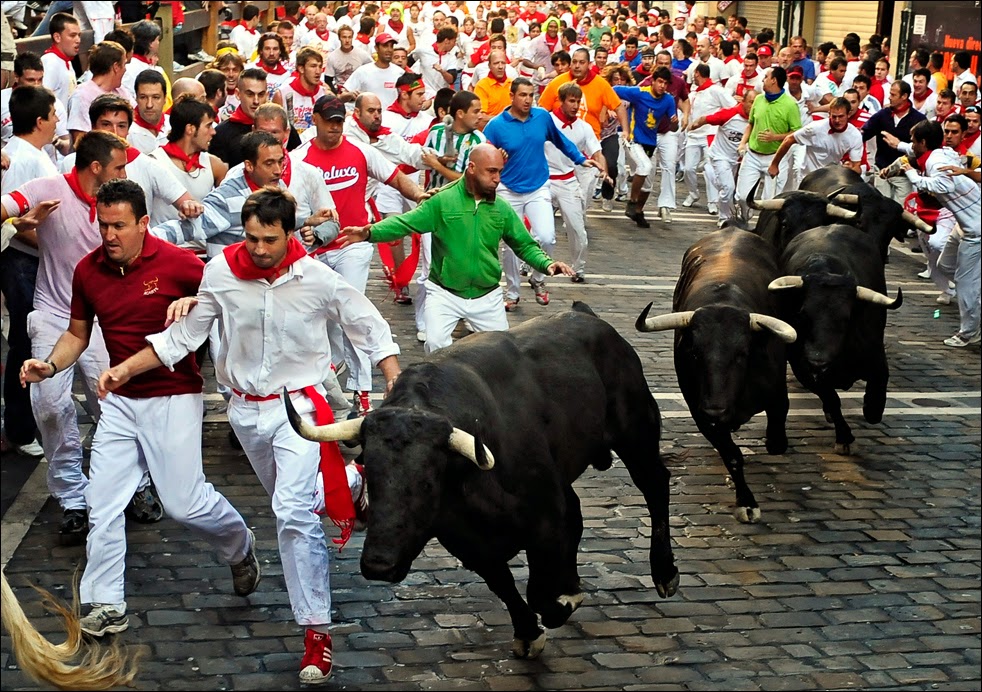
         PETA and the Animal Legal Defense Fund have filed a law suit against "Great Bull Run"- In other words, the famous Running of the Bulls. The run forces 1,500 bulls to run a quarter-mile while people dangerously run along with them. Even though to event representatives claim that they will assure the safety of the bulls, animal rights activists claim:

"it causes unnecessary stress and suffering to the animals" banning-beaumont.patch


The tradition of Running With the Bulls began in Pamplona Spain. The event started because it was an efficient way to move the bulls, but unfortunately it was followed by a bullfighting event. This run has received much attention in the United States and will occur in Telecula, California. PETA has claimed that this event is animal cruelty and does not abide by the current animal cruelty laws in California. 

"As a bovine veterinarian, I can confirm that this event is extremely stressful for the bulls and presents substantial risk of injury to them, as well as an enormous public safety risk to the humans participating,” States Dr. Holly Cheever - Veterinarian and VP of the New York Humane Association. banning-beaumont.patch
  
       Because of the lawsuit the event will have to obtain permits for the occasion. Unfortunately, 
representatives of the event state that if they cannot obtain the permits in time, they will simply move the event to LA, California. 


Saturday, April 5, 2014

Facebook for Senior Dogs

 
      Old Friends Senior Dog Sanctuary is a heart warming program that provides senior dogs with a loving home that otherwise would be in shelters or put down. Many senior dogs are sadly given up by owners, and have trouble finding new homes because of their age. Unfortunately, many people are not interested in adopting senior dogs because of attachment issues, health issues and time limits. Old Friends is one of the many programs that advocate for senior dogs and highlight the incredible benefits to adopting one. The facbeook page uploads stories and pictures of their dogs and each time get over 1,000 likes. Because of these Facebook groups, the support for senior dogs has spread.


       Old Friends is run by volunteers based in Mt. Juliet Tennesse. The sanctuary explains on their Facebook that they are currently housing and caring for thirty dogs, and have placed thirty three more dogs in forever foster homes.

Posted on their facebook page, Old Friends states their mission:

"Our mission is:
To provide a loving home, good food, high quality vet care, compassion and comfort to senior dogs for the remainder of their lives. 
To build a ForeverFoster Home network to enable us to place more senior dogs in loving, home settings for the duration of their lives.
To provide education on the joys and challenges of caring for aging dogs.
To work with other dog rescue groups to promote the adoption of senior dogs."

Their website contains an updated chart on the progress of their dogs and what the sanctuary is doing to care for them. 

Friday, April 4, 2014

Copenhagen Zoo leaves public asking questions


        The Copenhagen Zoo has caused an uproar with recent slaughterings of their animals. In addition to the Giraffe that was killed, the Zoo has now killed two adult lions and two cubs. When the Giraffe was slaughtered, the inhumane act occurred in front of young children, in order to "educate" them about population control and was followed with a public dissection of the body for educational purposes. Sadly afterwards Giraffe was fed to the lions. BBC


"It's a necessary part of keeping a healthy population," he shrugs. "Because we don't bring in animals from the wild any more, we need to do this." The Guardian

            The Zoo's explanation for the slaughter of four lions was centered around "saving the strong pride" that was currently at the Zoo. Martin, zookeeper at Copenhagen explained that the male lion would have killed the two cubs and the immature males in order to prove his power over the pride.

"This may, of course, seem harsh, but in nature it is necessary to ensure a strong pride of lions with the greatest chance of survival," Martin explained 


In the interview with employees at the Copenhagen Zoo conducted by The Guardian, they attempt to defend their actions. They claim that they "tried" to find a place for the lions to go, but in the end they never found one... which is baffling. Towards the end of the interview the employees become extremely accusatory to the public that is upset with the slaughters stating that "the meet you buy in the supermarket used to be a living animal"...and that the public has "disney-fied the animal world and that these animals have a life expectancy"... but what I can't wrap my head around is, did the baby lion cubs reach their life expectancy just as babies? Was there really no place for those babies to go? From the interview, the employees and obviously in a panic, coming up with many excuses for what they did, and limited reasoning for not being able to relocate them rather than kill them. 

       It is heartbreaking to research all of the global efforts and improvement to stop the poaching of wild animals - then to read about the slaughter of these same animals where they are supposed to be safe. In argument with the employees claiming the public does not have the education to understand why they had to kill these animals - that is not the publics argument. The public is left questioning, why could we not find another home for these animals? It is hard to believe there was truly no where for them to go. Countless Zoo's and sanctuaries around the world could have been contacted. 

Wednesday, March 26, 2014

California banning Orca's in SeaWorld


       California state legislator is presenting the action to forbid the captivity of Orca whales for the publics amusement at SeaWorld. The proposal of the ban came after the release of the documentary "Blackfish" - which presented the horrible treatment of the whales at SeaWorld.

"This is about greed and this is about corporate exploitation, both of the whales and the trainers, but most importantly the whales," said John Hargrove, a former SeaWorld orca trainer. CNN


          The documentary discussed how trainers will use food to bribe and punish the whales. For example, if one whale does not perform up to standards, they will not feed the entire group. Many times in the morning, the whale who did not perform would be covered in wounds from the other whales. The trainers purposely turn the whales against each other as a form of punishment. In addition, the documentary discusses the concerning dilemma of baby Orcas taken away from their mothers. Many of the infants are sold to other parks and removed from the mothers care immediately, which causes distress of the elder Orcas. The documentary also discusses the tragic death of Dawn Brancheau while performing with the orca whale Tilikum.


"After the tragic death of SeaWorld trainer Dawn Brancheau, the public has begun to question the moral justification of keeping orcas in captivity for our general entertainment," Assembly man Richard Bloom stated


        When the law passes it would terminate amusement performances for all killer whales in California, plans to breed orcas while in captivity and the selling and trading of orca whales within California state. In addition to these rules, the law would free the remaining orcas that are currently in captivity. Many of the whales would stay in larger enclosures, but would not perform. 


     "It is time that we embrace that the long-accepted practice of keeping orcas captive for human                                       amusement must end,"- Assembly man Richard Bloom CNN


Wednesday, March 19, 2014

Animal Testing


         One of the largest contributions we can make as animal lovers is to purchase cruelty-free bathing products and cosmetics. According to dosomething.org - "Over 100 million animals are burned, crippled, poisoned and abused in U.S. labs every year."Sadly, the law states that products must be tested on animals before they are tested on humans. The animals that are most commonly tested on are mice, rats, cats, bunnies, guinea pigs and monkeys. Often, chemicals are rubbed on their bear skin and sprayed into their eyes to measure irritation levels, which can be incredibly painful.
            The leaping bunny program is designed to inform consumers which products are not tested on animals. The symbol is posted on bottles of shampoo/soap and cosmetics to convey their animal friendly production. Many companies have made the pledge to be cruelty-free and proudly post the leaping bunny symbol on their products. As an animal lover it is important to support companies that support animals! Look for this symbol next time your shopping for bath products and cosmetics!


This is a list of companies that I have found that support the leaping bunny program:

Alba Botanicals
Aveda
ACURE
Afterglow Cosmetics
Alba Botanica
Alex and Ani
Aroma Crystal Therapy
Aroma Naturals Bath & Body Works
Burt’s Bees
Booda Organics
Botanical Skin Works
Botanicals for Hope Bronzo Sensualé
California Baby
Desert Essence
Dr. Bronner’s cleanser.
Earth Mama Angel Baby
Eucerin
Gabriel Cosmetics
Herbal Essences
Intelligent Nutrients
JASON
FíOR
Kiss My Face
Nature’s Gate
Organix-South, Inc.
Paul Mitchell
The Body Shop
Tom’s of Maine
Urban Decay
Walkers Natural Body Care
Warm Earth Cosmetics
Welcome Home
Well In Hand
WellSpring Naturals
Wholefood Farmacy
Whole Spectrum
Wholly HempYes to Carrots
YarokZosimos Botanicals
ZuZu Luxe

The full list of companies can be seen on http://leapingbunny.org/images/cciclist.pdf


Monday, March 3, 2014

Go Greyhound


         A topic that is often overlooked and ignored, Greyhound Racing is still a prominent hobby and source of entertainment across the United States. The majority of the dogs are killed or injured in the process of the sport. These dogs that are known to be friendly, energetic and loyal are run to death by this appalling sport.


        Most Greyhounds are born into breeding farms which provide small cages, where the dogs are kept for hours on end and limited medical funds. Because of the sufferable atmosphere, disease and misery spreads quickly in the breeding farms. The dogs that are deemed inadequate to race are either killed or sent to science labs to be used for testing.


    Greyhound racing is still an active sport in seven states in America. Florida, being the most active state, is where more than half of the Greyhound tracks exist. (12 of 21 ASPCA)  Sources of the dogs deaths involve incurable injuries afflicted because of racing, and heat stroke. More than half of the Greyhounds that die because of racing are under three years old.
      In order to save these pups from a deathly fate, organizations have come together to find the dogs loving homes. Whether they were deemed unfit to race, or injured from racing, many Greyhounds can be adopted for free. For Example, Greyhound Adoption Program (GAP) is a famous organization that saves these dogs from the terrors of racing. The website states that every Greyhound has a story, and offers an opportunity to adopt or foster a dog.


Stella and Felix are both retired racing dogs that are up for adoption through GAP. The website provides background of the dogs with their stories and racing histories. Rather than buying a dog from a breeder, rescue a Greyhound! They are loving dogs in need of caring homes.


Sunday, March 2, 2014

Sea Turtles, Help!


          In places such as Australia, Papau New Guinea, Japan and Mexico the hunting of sea turtles has dramatically declined their numbers, legally. Sea turtles are hunted for their meat, shells, skin and eggs. In addition to being over hunted and poached, Sea turtle numbers have decreased because of natural environment devastation and accidental killing from fisherman.

"Since 1980, we estimate that more than 2 million turtles have been legally taken in these countries," Huffington Post states.


According to World Wildlife the turtles that are critically endangered and vulnerable are the Green Turtle (37,000 killed each year), Leatherback turtle, Hawksbill Turtle, Loggerhead Turtle, Olive Ridley Turtle and the Sea Turtle. From hunting, around 42,000 turtles are killed each year where hunting is legal.

        The Convention on International Trade in Endangered Species of Wild Fauna and Flora, in other words CITES is a global contract between governments to ensure and promote the safety of endangered species. Most of the trade of wild animals and plants occurs on different borders across the world, and the only way to control it is for every country to contribute. Although illegal trafficking of turtle meat and parts still occurs, it is illegal under this agreement. This convention allows for international power to stop illegal trafficking of the species.


How we can help:

-Purchasing certified seafood - and pushing for restaurants and grocery stores to only purchase sustainable and certified seafood.

-Support Sea turtle tours - eco tourism supports local communities as well as organizations working to save turtles.

-Do not buy tortoiseshell jewelry or souvenirs - promotes hunting and poaching


Get Involved! Sign Petitions!


Tuesday, February 25, 2014

Fame and Furry Friends


     David Backes, the St. Louis Blue's hockey captain brought home stray Sochi puppies from the 2014 Winter Olympics. David and his wife Kelly, rescued the pups off of the streets in sochi to save them from being exterminated. The puppies were taken back to St. Louis in order to find loving homes. The couple have four rescue dogs and two rescue cats at home in the United States and are working to spread awareness to the public for animal rights.


"We're just trying to widen our scope to help animals across the (U.S.) and across the world, and doing what we can," Backes said Tuesday. CBS

-

        American media and acting icons Katherine Heigl and Ali Fedotowsky team up to raise awarness about the Sochi dogs. Katherine has already started a foundation for stray dogs called Jason Debus Heigl Foundation to help pups find new homes. 


         Ali was in Sochi covering the 2014 Winter Olympics and returned home with two Sochi pups, and Katherine waited anxiously at the airport for the dogs to arrive in LAX. Both Katherine and Ali are working to help them find loving homes. As soon as the dogs arrived, they received medical attention and a weekend to recover from travels before meeting their new families. 

-

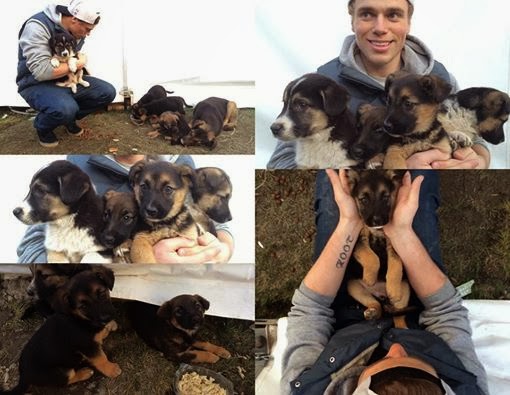
        Gus Kenworthy, the silver medalist of the men's ski slope style competition in the 2014 Winter Olympics fell in love with four Sochi puppies. Gus has been buying kennels and leashes in the meantime in Sochi before he can bring them home. Gus states that he visited them everyday because the dogs were not allowed in the olympic village. Gus and his pups


Monday, February 24, 2014

Bear Bile

         Across South East Asia bears are being confined in order for scientists to draw out their bile for asian medicine. The conditions the bears endure is cruel. Bear farmers claim that keeping the bears in confinement will improve their population numbers. Although, many of the bears in bear farms are sold illegally by poachers. The donation of gall bladders and bile is painful, and at what cost are we willing to "save" the population?


There are countless petitions and facebook groups supporting the protest against inhumane treatment of bears for bile. 


       The World Society of Protection of Animals has been working to stop bear farming for bile by working with Asian government officials, stop the illegal trade and poaching of bears, and help Asian scientists find other alternatives for medicine. WSPA


"More than 10,000 bears – mainly moon bears, but also sun bears and brown bears – are kept on bile farms in China, and around 2,400 in Vietnam. The bears are milked regularly for their bile, which is used in traditional medicine." AnimalsAsia

        More importantly, the foundation called Animals Asia has been working to stop the cruelty from the country in which is resides. They describe how the operations are extremely invasive, and many bears are kept for over thirty years in small cages. Bear sanctuaries have been created to help the bears recover from their time in the farms and to study the procedures that they had to endure. The sanctuaries have helped raise awareness to the public and the scientific community. In sanctuaries are centered in Chengdu, China and Tam Dao, Vietnam. The organizations provide the bears with a pleasant and spacious dens, with enclosures that illustrate the feeling of being in the wild. In these centers, the bears are able to recover. According to the Animals Asia website, there have been four hundred bears saved through these sanctuaries.


Sunday, February 23, 2014

Help the Honeybees

             The U.S. Department of Agriculture stated Tuesday, February 26th, that they would contribute funding to farmers and ranchers upgrade grass lands in five Midwestern states to supply food for the diminishing number of honeybees left. The statement included an offer of over three million dollars, in order to sustain and increase the number of honeybees left. The ultimate goal is to provide farmers in Michigan, Texas, Minnesota, Wisconsin, North and South Dakota with funds to improve their farms and the lives of their livestock and bees.


            The ultimate goal the USDA is trying to reach is to save the lives of honeybees which are very much in danger. In preparation, they have worked with universities to conduct studies on the bees to learn more about the cause of their decline. Members from the CCD Steering Committee and Pennsylvania State University held a seminar in Virginia that would begin the research into the needs of the honeybees. According to the USDA one hundred and seventy five people attended. These individuals included, animal rights activists, scientist, government officials, beekeepers and scholars from all over the globe. Because of habitat loss and overusing pesticides, commercial agricultural production has declined and the number of honeybees has plummeted. Every year, honeybees provide our country with over $15 billion produce and goods. HuffingtonPost


"Despite a remarkably intensive level of research effort towards understanding causes of 
managed honeybee colony losses in the United States, overall losses continue to be high 
and pose a serious threat to meeting the pollination service demands for several 
commercial crops."USDA

       The USDA plans to fund places for bees to increase food stock and be able to survive the winter. The purpose is to improve not only the number of bees, but their habitats as well. The president of the American Beekeeping Federation and owner of five hundred bee hives in Texas, Tim Tucker states:
"Anything we do to help provide habitat for honeybees and for native bees and pollinators is a step."


Wednesday, February 19, 2014

Lilly the Deer


           A Michigan family (whose identify remains confidential) have been raising a pet deer for the past five years in their home. The family hit her mother with their car which lead to her birth. The deer, Lilly, has since been living with their family, snuggling with the cat on the couch and playing in the yard with dog. This family was all that Lilly had ever known, and was completely taken care of. None of the neighbors had a problem with Lilly's living situations and Lily had recovered from the accident beautifully, growing into a healthy happy deer.


          After a report was called in from a neighbors friend, the state government attempted to take Lilly away from her family in 2012. Stating the law that claims: if a baby deer is found or hit because of a car accident the person is not allowed to take the fawn. Michigan law states that a person can only have a wildlife animal if they are licensed rehabilitators. Michigan’s Department of Natural Resources threatened to take Lilly from her family, therefore began a large uproar on the internet. A change.org petition gathered 16,004 signatures, and an Indiegogo petition that vegan to raise money for her owners and raised nearly $2,500.There was also a Facebook page that was created to create awareness and have a place for supporters to voice their opinions.


      Lilly's owners hired an attorney to fight against her removal from their home. The government stated that she would be removed and rehabilitated to return to the wild, put into a zoo, or she would be put down. Their argument was that Lilly could not defend herself in the wild, and they would provide a loving home for the animal. The offer was that they would obtain a permit so that Lilly can officially stay in their home legally. This case was an exception, and a very rare one. A couple months after they began the lawsuit, the family won the rights to keep Lilly in their home.

“Lilly’s caretakers have applied for an Exhibition Class Permit and they will continue to provide Lilly with the love, care, and environment she needs to thrive,” the family lawyer, Val Washington said.

Monday, February 17, 2014

North Carolina Ash Coal Spill


       According to North Carolina police, arsenic and other dangerous toxins have been flowing into the Dan river from the Duke Energy coal ash dump, which began February 2nd. The state Department of Environment and Natural Resources reported that a second pipe caved in without warning February 2nd, flooding the Dan River with toxic ash spreading seventy miles throughout the lake.

"Federal authorities expressed concern for what long-term effect the contaminants will have on fish, mussels and other aquatic life." HuffingtonPost


          There are two endangered species in the Dan River which flows through North Carolina and Virginia. The Roanoke Logperch fish and the James spinymussel, and the green floater mussel (which is under evaluation to be added to the federal endangered species list). In addition, the turtles that have been hibernating at the bottom of the river have been crawling to the beaches and dying. The coal ash is suffocating the animals underneath the bottom of the river and clogging the gills on the fish and mussels.


       Although officials will not know the full impact of the spill for some time, the Duke energy coal ash dump has been working on treating and testing the water. According to water treatment authorities the water is ridded of all dangerous toxins and safe to drink, but the arsenic levels are still high. Officials mention the risk of rain, which will carry the left over toxins and arsenic downstream. 


Sunday, February 16, 2014

Free Range or Fraud?

      The Animal Legal Defense Fund is a nonprofit organization based in California which works to protect animals through the legal system. Their latest lawsuit began in 2012, the case of Judy’s Family Farm providing false advertising to their consumers. Judy’s Family Farm sells “free range organic” eggs, according to the label on their eggs in stores.


“These hens are raised in wide open spaces in Sonoma Valley, where they are free to roam, scratch and play.”

           Consumers were lead to believe that the chickens were given room to roam freely outside, and bought the eggs to support free-range farm animals. The farm was found out to be opposite of what they were claiming on their boxes of eggs. The hens were kept in such close quarters that their wings could not open, and they had no outlet to the outdoors. Because there are very few laws that protect hens against cruelty and “humane” is a very overused word when it comes to laws supporting ethical treatment of animals, being able to twist the lawsuit and accuse them of fraud was the best way to protect the hens on this farm. After months of negotiating the two sides came to a detailed agreement:

1.) Change the packaging on the eggs by taking off the picture of hens on an open grass field, and removing the descriptions of the hens lifestyle that lead consumers to wrongly believe the eggs come from hens with substantial outdoor access;
2.) Acquire Certified Humane certification - Human Farm Animal Care: an organization that works to improve the lives of farm animals. (According to Humane Farm Animal Care, 68% of consumers want to know what farmers are doing to ensure animal care.)
3.) A donation of $14,666.67 to Sonoma Humane Society for hen recovery and rescue efforts, $14,666.67 to the Public Justice Foundation to help victims of false advertising, and $14,666.66 to Consumer Action to help the victims of consumer fraud.
Care2
ALDF
 

Thursday, February 13, 2014

Combatting Wildlife Trafficking

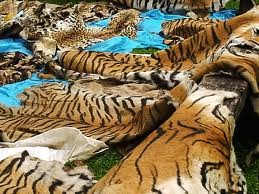
            On February 11th, the White House announced the National Strategy for Combatting Wildlife trafficking. Illegal trade in wildlife is an urgent problem for many wildlife species and affecting the numbers of species around the world greatly. Millions of dollars every year come from major smugglers illegally selling rare animal parts. The most common animals that are killed for their parts are elephants (for their ivory), rhinos (for their horns) and tigers (for their skin). Illegal trade is one of the largest contributing factors to the danger in the survival of many wildlife species.


The United States targets for stopping illegal wildlife trading are as follows:

- Increasing strict regulations within and outside of the United States

- Diminish the need for illegally traded goods

- Reinforce alliances globally, domestically, with companies and non-profits to fight against poaching

              In addition to reaching these goals, the White House has announced principals within the United States that to support the new strategy. The action of banning the import and export of elephant ivory, significantly limit resales of elephant ivory, set strict and official guidelines as to what is "antique" in order to sell (requirements follows the Endangered Species Act), and reinforce limitations for wildlife sport hunting. In time government officials will strengthen the laws listed above and meet with international global alliances in hope they will join the movement. -The White House


                The World Wildlife Fund has been addressing this problem for years, and with the White House's support, we can save countless endangered species. The WWF have been working with wildlife trade monitoring network (TRAFFIC) to enforce regulations on hunting and smuggling animal parts globally. The largest problem that WWF and TRAFFIC have been working with is poaching in developing countries, where law enforcements and education on the topic are lacking. WWF


           The CEO of WWF Carter Roberts released a comment on President Obama's new regime to implement securing the safety of wildlife species:

“Today marks a significant milestone in the global fight against wildlife crime. President Obama has elevated illegal wildlife trafficking to a priority issue for more than a dozen federal agencies, reflecting the fact that it has grown into one of the most profitable criminal industries in the world, estimated at $10 billion annually.The President’s strategy is complemented by Congress’ recent, unprecedented  approval of$45 million in newly dedicated funding to combat illegal wildlife trafficking."