Wednesday, March 26, 2014

California banning Orca's in SeaWorld


       California state legislator is presenting the action to forbid the captivity of Orca whales for the publics amusement at SeaWorld. The proposal of the ban came after the release of the documentary "Blackfish" - which presented the horrible treatment of the whales at SeaWorld.

"This is about greed and this is about corporate exploitation, both of the whales and the trainers, but most importantly the whales," said John Hargrove, a former SeaWorld orca trainer. CNN


          The documentary discussed how trainers will use food to bribe and punish the whales. For example, if one whale does not perform up to standards, they will not feed the entire group. Many times in the morning, the whale who did not perform would be covered in wounds from the other whales. The trainers purposely turn the whales against each other as a form of punishment. In addition, the documentary discusses the concerning dilemma of baby Orcas taken away from their mothers. Many of the infants are sold to other parks and removed from the mothers care immediately, which causes distress of the elder Orcas. The documentary also discusses the tragic death of Dawn Brancheau while performing with the orca whale Tilikum.


"After the tragic death of SeaWorld trainer Dawn Brancheau, the public has begun to question the moral justification of keeping orcas in captivity for our general entertainment," Assembly man Richard Bloom stated


        When the law passes it would terminate amusement performances for all killer whales in California, plans to breed orcas while in captivity and the selling and trading of orca whales within California state. In addition to these rules, the law would free the remaining orcas that are currently in captivity. Many of the whales would stay in larger enclosures, but would not perform. 


     "It is time that we embrace that the long-accepted practice of keeping orcas captive for human                                       amusement must end,"- Assembly man Richard Bloom CNN


Wednesday, March 19, 2014

Animal Testing


         One of the largest contributions we can make as animal lovers is to purchase cruelty-free bathing products and cosmetics. According to dosomething.org - "Over 100 million animals are burned, crippled, poisoned and abused in U.S. labs every year."Sadly, the law states that products must be tested on animals before they are tested on humans. The animals that are most commonly tested on are mice, rats, cats, bunnies, guinea pigs and monkeys. Often, chemicals are rubbed on their bear skin and sprayed into their eyes to measure irritation levels, which can be incredibly painful.
            The leaping bunny program is designed to inform consumers which products are not tested on animals. The symbol is posted on bottles of shampoo/soap and cosmetics to convey their animal friendly production. Many companies have made the pledge to be cruelty-free and proudly post the leaping bunny symbol on their products. As an animal lover it is important to support companies that support animals! Look for this symbol next time your shopping for bath products and cosmetics!


This is a list of companies that I have found that support the leaping bunny program:

Alba Botanicals
Aveda
ACURE
Afterglow Cosmetics
Alba Botanica
Alex and Ani
Aroma Crystal Therapy
Aroma Naturals Bath & Body Works
Burt’s Bees
Booda Organics
Botanical Skin Works
Botanicals for Hope Bronzo Sensualé
California Baby
Desert Essence
Dr. Bronner’s cleanser.
Earth Mama Angel Baby
Eucerin
Gabriel Cosmetics
Herbal Essences
Intelligent Nutrients
JASON
FíOR
Kiss My Face
Nature’s Gate
Organix-South, Inc.
Paul Mitchell
The Body Shop
Tom’s of Maine
Urban Decay
Walkers Natural Body Care
Warm Earth Cosmetics
Welcome Home
Well In Hand
WellSpring Naturals
Wholefood Farmacy
Whole Spectrum
Wholly HempYes to Carrots
YarokZosimos Botanicals
ZuZu Luxe

The full list of companies can be seen on http://leapingbunny.org/images/cciclist.pdf


Monday, March 3, 2014

Go Greyhound


         A topic that is often overlooked and ignored, Greyhound Racing is still a prominent hobby and source of entertainment across the United States. The majority of the dogs are killed or injured in the process of the sport. These dogs that are known to be friendly, energetic and loyal are run to death by this appalling sport.


        Most Greyhounds are born into breeding farms which provide small cages, where the dogs are kept for hours on end and limited medical funds. Because of the sufferable atmosphere, disease and misery spreads quickly in the breeding farms. The dogs that are deemed inadequate to race are either killed or sent to science labs to be used for testing.


    Greyhound racing is still an active sport in seven states in America. Florida, being the most active state, is where more than half of the Greyhound tracks exist. (12 of 21 ASPCA)  Sources of the dogs deaths involve incurable injuries afflicted because of racing, and heat stroke. More than half of the Greyhounds that die because of racing are under three years old.
      In order to save these pups from a deathly fate, organizations have come together to find the dogs loving homes. Whether they were deemed unfit to race, or injured from racing, many Greyhounds can be adopted for free. For Example, Greyhound Adoption Program (GAP) is a famous organization that saves these dogs from the terrors of racing. The website states that every Greyhound has a story, and offers an opportunity to adopt or foster a dog.


Stella and Felix are both retired racing dogs that are up for adoption through GAP. The website provides background of the dogs with their stories and racing histories. Rather than buying a dog from a breeder, rescue a Greyhound! They are loving dogs in need of caring homes.


Sunday, March 2, 2014

Sea Turtles, Help!


          In places such as Australia, Papau New Guinea, Japan and Mexico the hunting of sea turtles has dramatically declined their numbers, legally. Sea turtles are hunted for their meat, shells, skin and eggs. In addition to being over hunted and poached, Sea turtle numbers have decreased because of natural environment devastation and accidental killing from fisherman.

"Since 1980, we estimate that more than 2 million turtles have been legally taken in these countries," Huffington Post states.


According to World Wildlife the turtles that are critically endangered and vulnerable are the Green Turtle (37,000 killed each year), Leatherback turtle, Hawksbill Turtle, Loggerhead Turtle, Olive Ridley Turtle and the Sea Turtle. From hunting, around 42,000 turtles are killed each year where hunting is legal.

        The Convention on International Trade in Endangered Species of Wild Fauna and Flora, in other words CITES is a global contract between governments to ensure and promote the safety of endangered species. Most of the trade of wild animals and plants occurs on different borders across the world, and the only way to control it is for every country to contribute. Although illegal trafficking of turtle meat and parts still occurs, it is illegal under this agreement. This convention allows for international power to stop illegal trafficking of the species.


How we can help:

-Purchasing certified seafood - and pushing for restaurants and grocery stores to only purchase sustainable and certified seafood.

-Support Sea turtle tours - eco tourism supports local communities as well as organizations working to save turtles.

-Do not buy tortoiseshell jewelry or souvenirs - promotes hunting and poaching


Get Involved! Sign Petitions!


Tuesday, February 25, 2014

Fame and Furry Friends


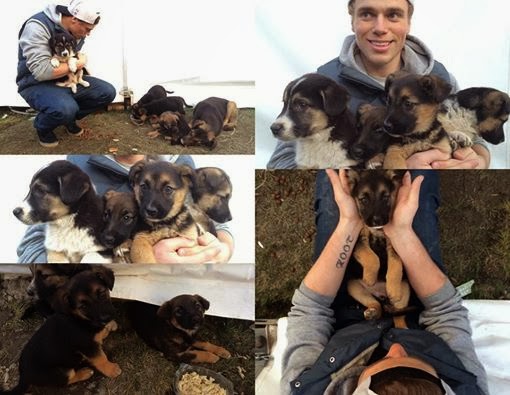
     David Backes, the St. Louis Blue's hockey captain brought home stray Sochi puppies from the 2014 Winter Olympics. David and his wife Kelly, rescued the pups off of the streets in sochi to save them from being exterminated. The puppies were taken back to St. Louis in order to find loving homes. The couple have four rescue dogs and two rescue cats at home in the United States and are working to spread awareness to the public for animal rights.


"We're just trying to widen our scope to help animals across the (U.S.) and across the world, and doing what we can," Backes said Tuesday. CBS

-

        American media and acting icons Katherine Heigl and Ali Fedotowsky team up to raise awarness about the Sochi dogs. Katherine has already started a foundation for stray dogs called Jason Debus Heigl Foundation to help pups find new homes. 


         Ali was in Sochi covering the 2014 Winter Olympics and returned home with two Sochi pups, and Katherine waited anxiously at the airport for the dogs to arrive in LAX. Both Katherine and Ali are working to help them find loving homes. As soon as the dogs arrived, they received medical attention and a weekend to recover from travels before meeting their new families. 

-

        Gus Kenworthy, the silver medalist of the men's ski slope style competition in the 2014 Winter Olympics fell in love with four Sochi puppies. Gus has been buying kennels and leashes in the meantime in Sochi before he can bring them home. Gus states that he visited them everyday because the dogs were not allowed in the olympic village. Gus and his pups


Monday, February 24, 2014

Bear Bile

         Across South East Asia bears are being confined in order for scientists to draw out their bile for asian medicine. The conditions the bears endure is cruel. Bear farmers claim that keeping the bears in confinement will improve their population numbers. Although, many of the bears in bear farms are sold illegally by poachers. The donation of gall bladders and bile is painful, and at what cost are we willing to "save" the population?


There are countless petitions and facebook groups supporting the protest against inhumane treatment of bears for bile. 


       The World Society of Protection of Animals has been working to stop bear farming for bile by working with Asian government officials, stop the illegal trade and poaching of bears, and help Asian scientists find other alternatives for medicine. WSPA


"More than 10,000 bears – mainly moon bears, but also sun bears and brown bears – are kept on bile farms in China, and around 2,400 in Vietnam. The bears are milked regularly for their bile, which is used in traditional medicine." AnimalsAsia

        More importantly, the foundation called Animals Asia has been working to stop the cruelty from the country in which is resides. They describe how the operations are extremely invasive, and many bears are kept for over thirty years in small cages. Bear sanctuaries have been created to help the bears recover from their time in the farms and to study the procedures that they had to endure. The sanctuaries have helped raise awareness to the public and the scientific community. In sanctuaries are centered in Chengdu, China and Tam Dao, Vietnam. The organizations provide the bears with a pleasant and spacious dens, with enclosures that illustrate the feeling of being in the wild. In these centers, the bears are able to recover. According to the Animals Asia website, there have been four hundred bears saved through these sanctuaries.


Sunday, February 23, 2014

Help the Honeybees

             The U.S. Department of Agriculture stated Tuesday, February 26th, that they would contribute funding to farmers and ranchers upgrade grass lands in five Midwestern states to supply food for the diminishing number of honeybees left. The statement included an offer of over three million dollars, in order to sustain and increase the number of honeybees left. The ultimate goal is to provide farmers in Michigan, Texas, Minnesota, Wisconsin, North and South Dakota with funds to improve their farms and the lives of their livestock and bees.


            The ultimate goal the USDA is trying to reach is to save the lives of honeybees which are very much in danger. In preparation, they have worked with universities to conduct studies on the bees to learn more about the cause of their decline. Members from the CCD Steering Committee and Pennsylvania State University held a seminar in Virginia that would begin the research into the needs of the honeybees. According to the USDA one hundred and seventy five people attended. These individuals included, animal rights activists, scientist, government officials, beekeepers and scholars from all over the globe. Because of habitat loss and overusing pesticides, commercial agricultural production has declined and the number of honeybees has plummeted. Every year, honeybees provide our country with over $15 billion produce and goods. HuffingtonPost


"Despite a remarkably intensive level of research effort towards understanding causes of 
managed honeybee colony losses in the United States, overall losses continue to be high 
and pose a serious threat to meeting the pollination service demands for several 
commercial crops."USDA

       The USDA plans to fund places for bees to increase food stock and be able to survive the winter. The purpose is to improve not only the number of bees, but their habitats as well. The president of the American Beekeeping Federation and owner of five hundred bee hives in Texas, Tim Tucker states:
"Anything we do to help provide habitat for honeybees and for native bees and pollinators is a step."